Case studies in aligning with reality — and shaping it.
A selection of engagements across regulated industries, consumer goods, media, and healthcare. Every project begins with a question, and the answers follow.
- Case 01 / 08
Big News in a "Small" World
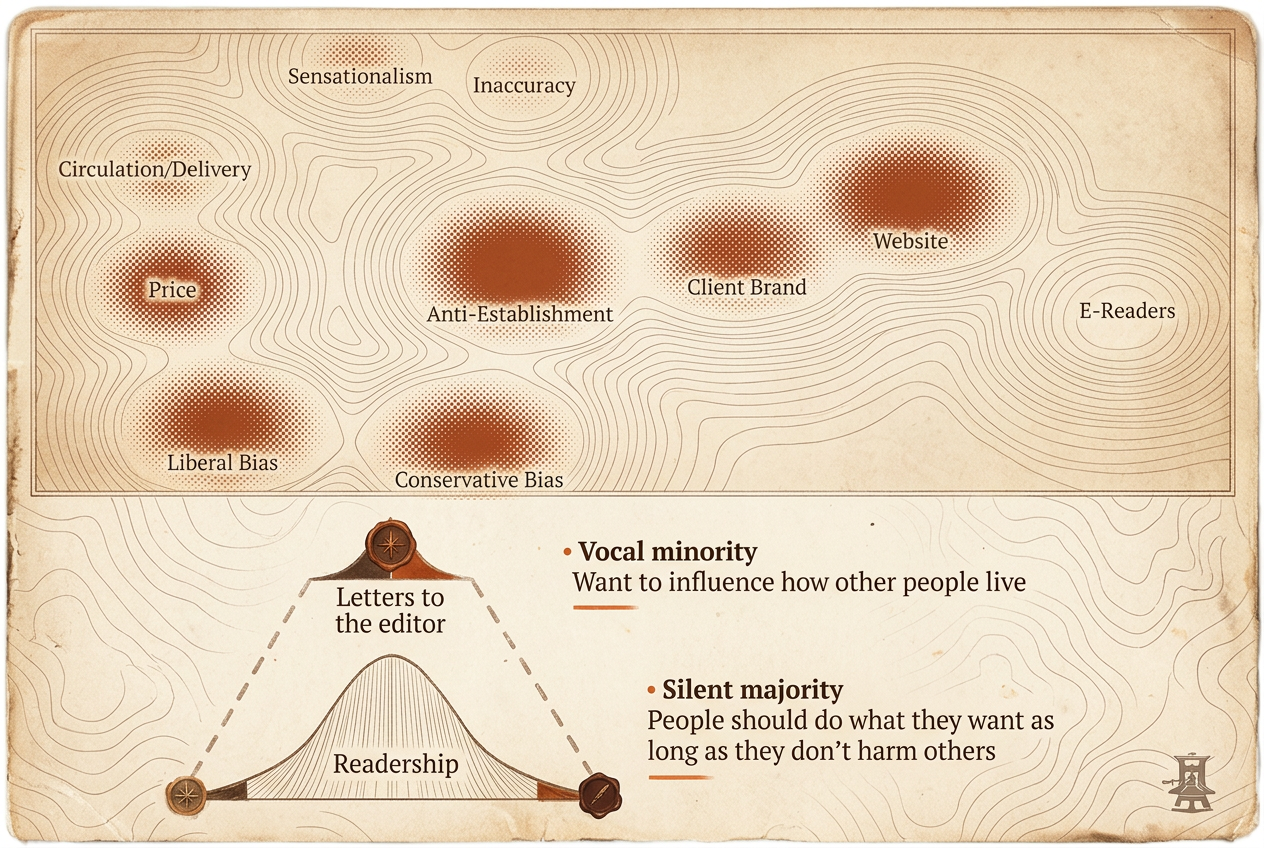 Understanding your environment through landscape mapping
Before anyone had breathed a word about "dueling populisms", we were approached by a newspaper concerned that their steeply declining readership was due to perceptions of partisan bias, and they were ready to launch costly initiatives to reduce this bias. Finding very little preliminary evidence of perceived editorial bias, we suggested that their problem was not "left vs right" but "big vs small" — a growing mistrust of establishment institutions.
Legacy media had a major blind spot, starting from the assumption that people should trust them because of their prestige. By swallowing this pill earlier than most, our client was able to survive the legacy media purge by orienting toward local impacts of global events, delivered by "people like me" rather than unrelatable, distant talking heads.
- Case 02 / 08
Under Pressure
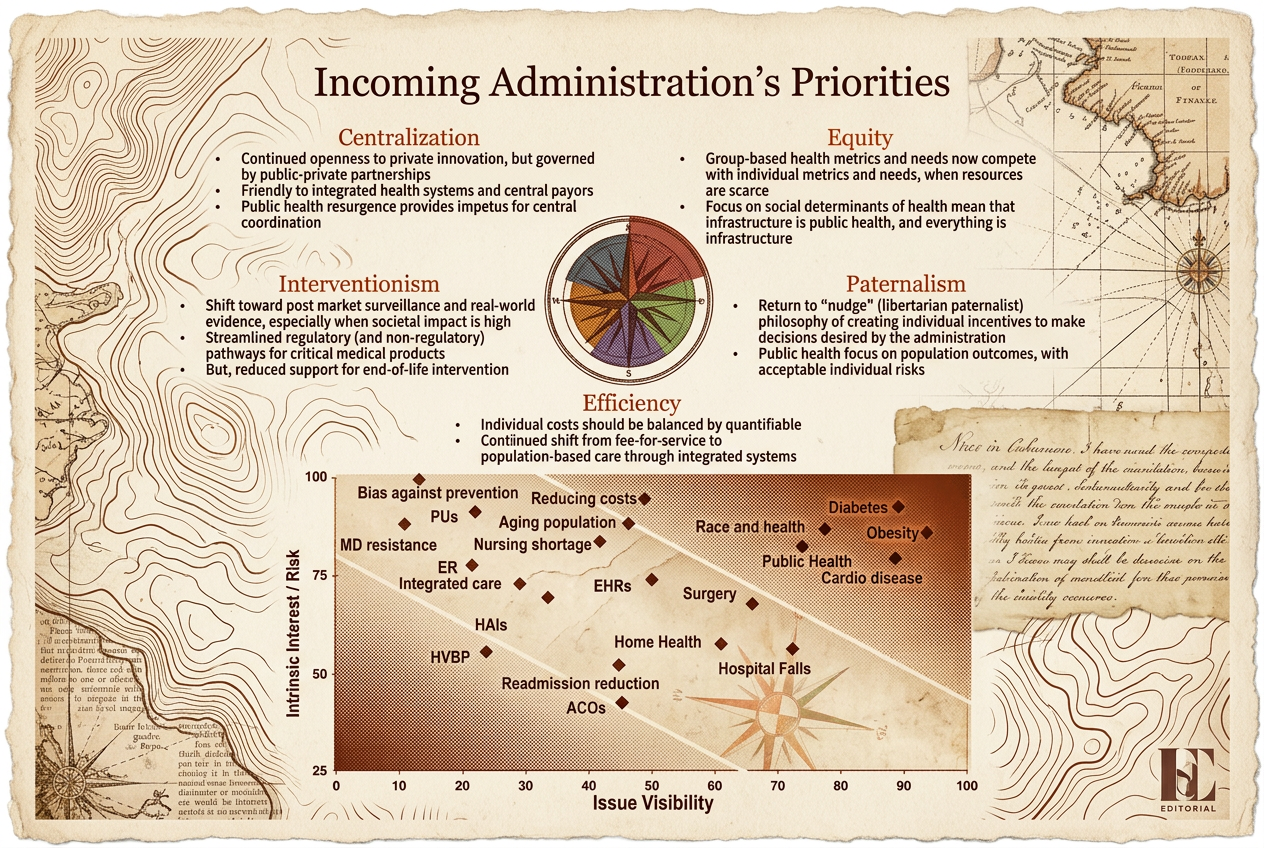 Building a coalition of stakeholders to speed regulatory approval
Complications from pressure ulcers can cost hundreds of thousands of dollars to treat, while a meta-analysis of the efficacy literature found that our client's product reliably reduced their incidence to virtually zero, for pennies comparatively. It should have been a no-brainer to get accelerated regulatory approval — except there was very little political will.
We worked with our client to engage the ACA-retooled CMS with a coalition of stakeholders designed to match the administration's political priorities. Darker-skinned patients are at special risk of undetected pressure ulcers, and health equity was an emerging priority. One of our favorite examples of helping clients do good while doing well.
- Case 03 / 08
No More Tiers
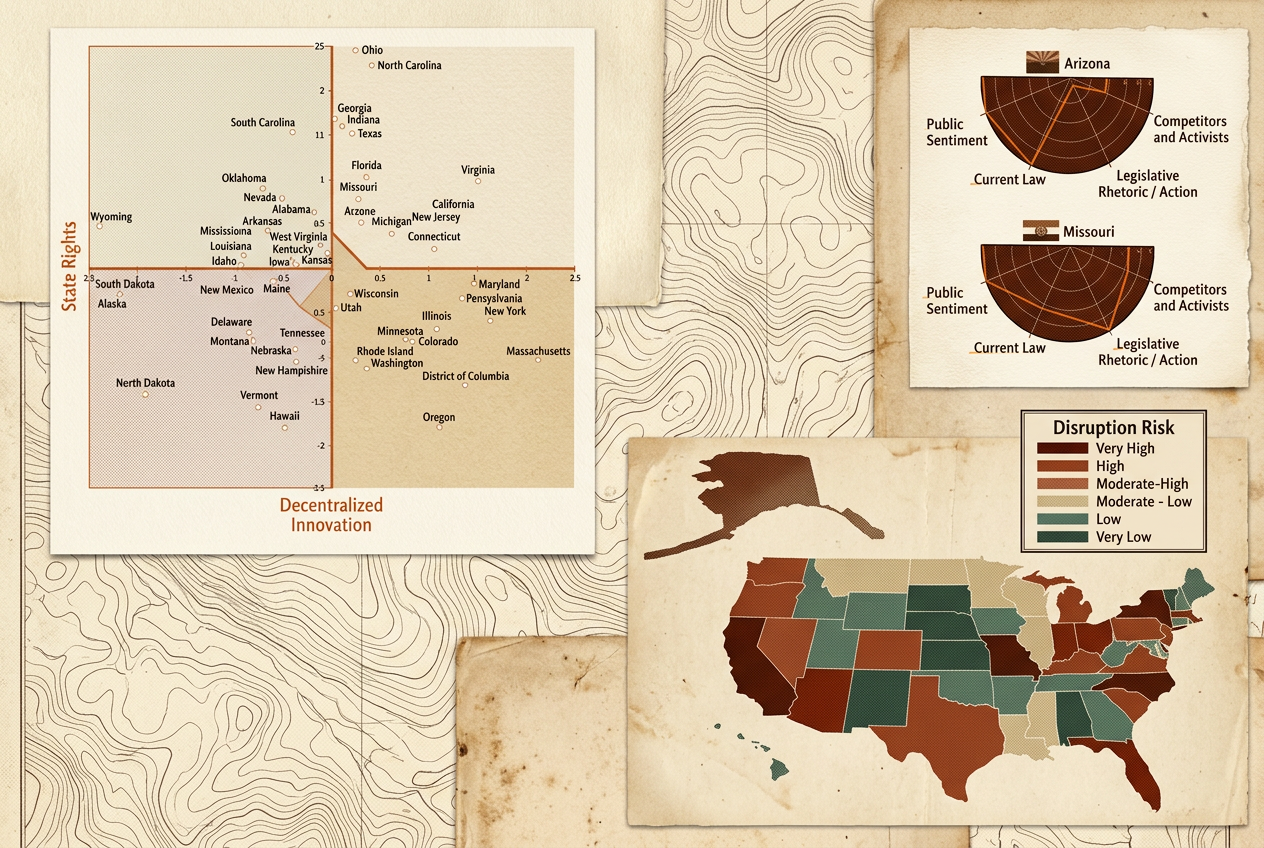 Segmenting and sequencing engagement strategies by state
Alcohol markets are heavily regulated, creating a three-tier system of licensed producers, distributors, and retailers. As the libertarian strain of the political right pushes for freer markets, some states have begun to crack in their support, opening exceptions for craft breweries and distilleries.
In states with public and legislative support for decentralization, the client partnered with craft distillers to fill the power vacuum. In states with popularly accepted legislative control, the client fought to preserve the three-tier system. State-level segmentation continues to prove useful as US states become less homogenous.
- Case 04 / 08
Who Needs Enemies…?
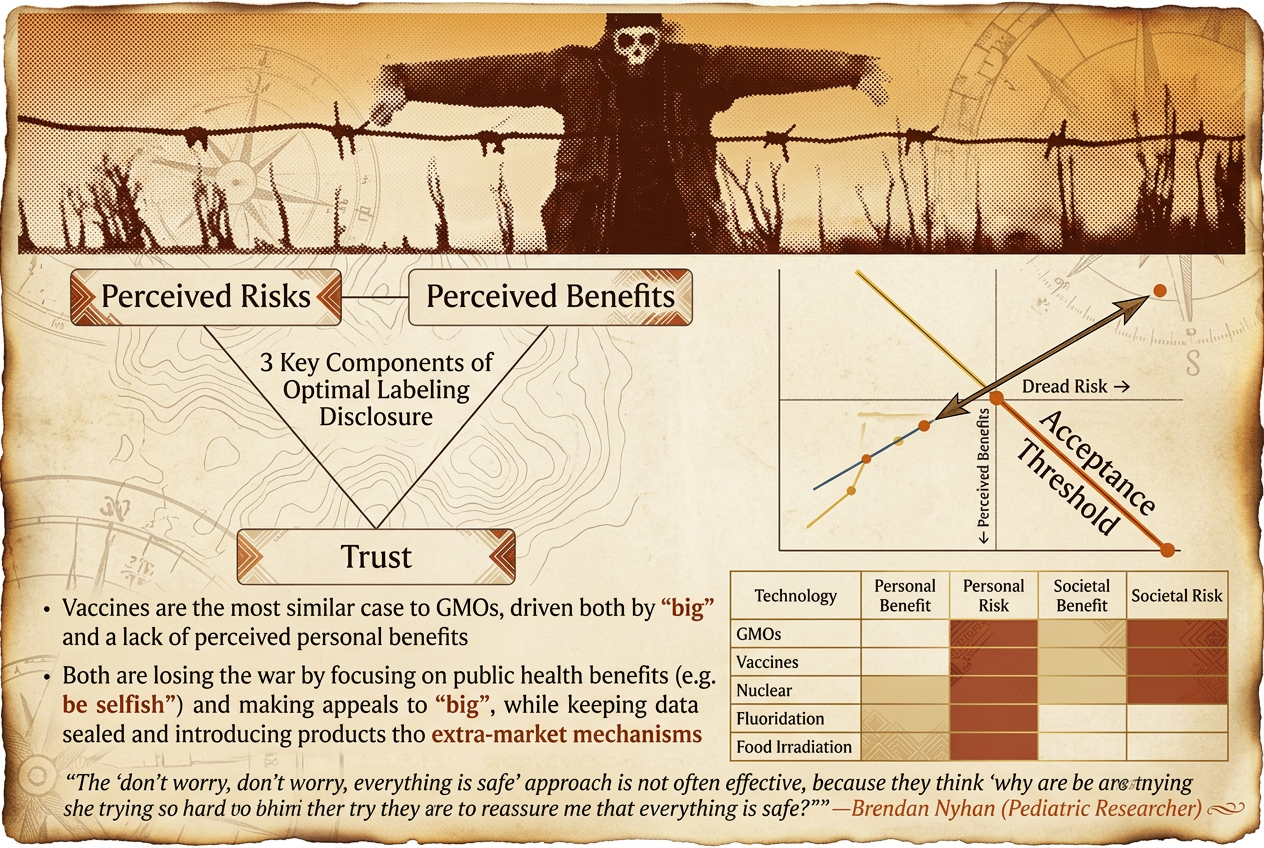 Make sure your industry association is representing your strategic interests
When Vermont was set to pass mandatory GMO labeling, the packaged food industry took it seriously. Grocery Manufacturers of America signaled a high willingness to fight this law — very publicly. Being correct and having the resources to win legally is not the same as winning reputationally.
By defecting early from this coalition and launching its own self-regulatory labeling solution, the client was first to market with labeling language that set a standard for the industry — structured to underscore the client's competitive differentiators.
- Case 05 / 08
What's on the Menu Tomorrow?
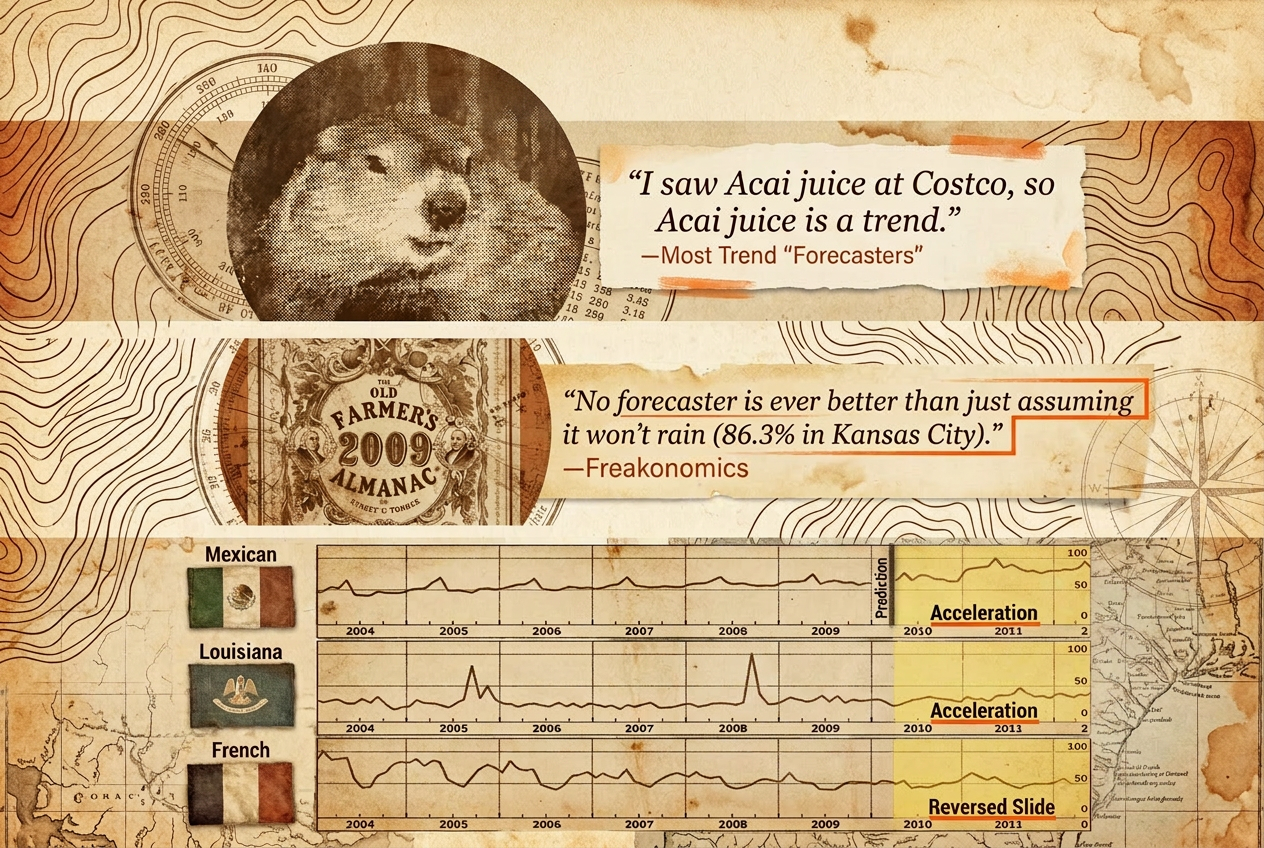 Using beyond-market signposts to anticipate consumer trends
Americans periodically become enamored with another culture. These fascinations are not random — they are driven by geopolitical forces, trade flows, popular media, risk perception, and other factors. Predicting trend reversals or acceleration requires identifying each of these forces and how they connect.
We helped a large food client identify which cuisines would gain momentum in the United States, using signposts like ingredient taboos, superfood fascinations, health and wellness trends, regulatory positions, trade flows, cultural mega-events, and tourism trends. The client positioned its ingredients for the next five years, instead of the last five.
- Case 06 / 08
It's Not Easy Being Beige
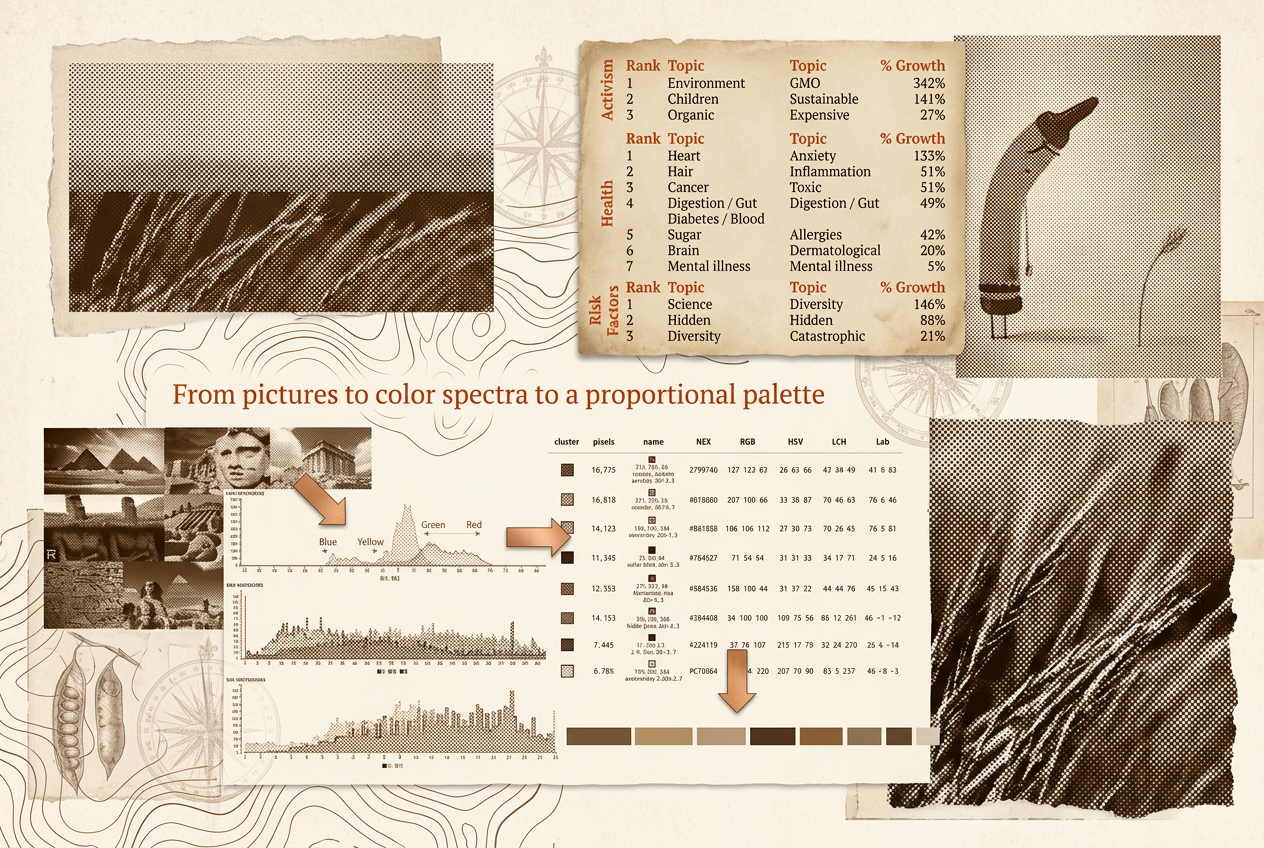 Shape the concepts that people associate with your brand
When cultural trends align to demonize your product, and the movement is based on emotion rather than fact, fighting back with facts is often the wrong approach. Realigning your product with a new set of concepts can sidestep the stigma and reframe the discussion.
We encountered this with a large wheat producer, whose product had been battered by alternative health media. Wheat had strong "real people" and "real food" competencies, and was positioned to ride the incoming wave of anti-elitism and mistrust in reductionist science. Reframing the discourse encouraged opportunistic dogpilers to move on.
- Case 07 / 08
Stay in Your Lane
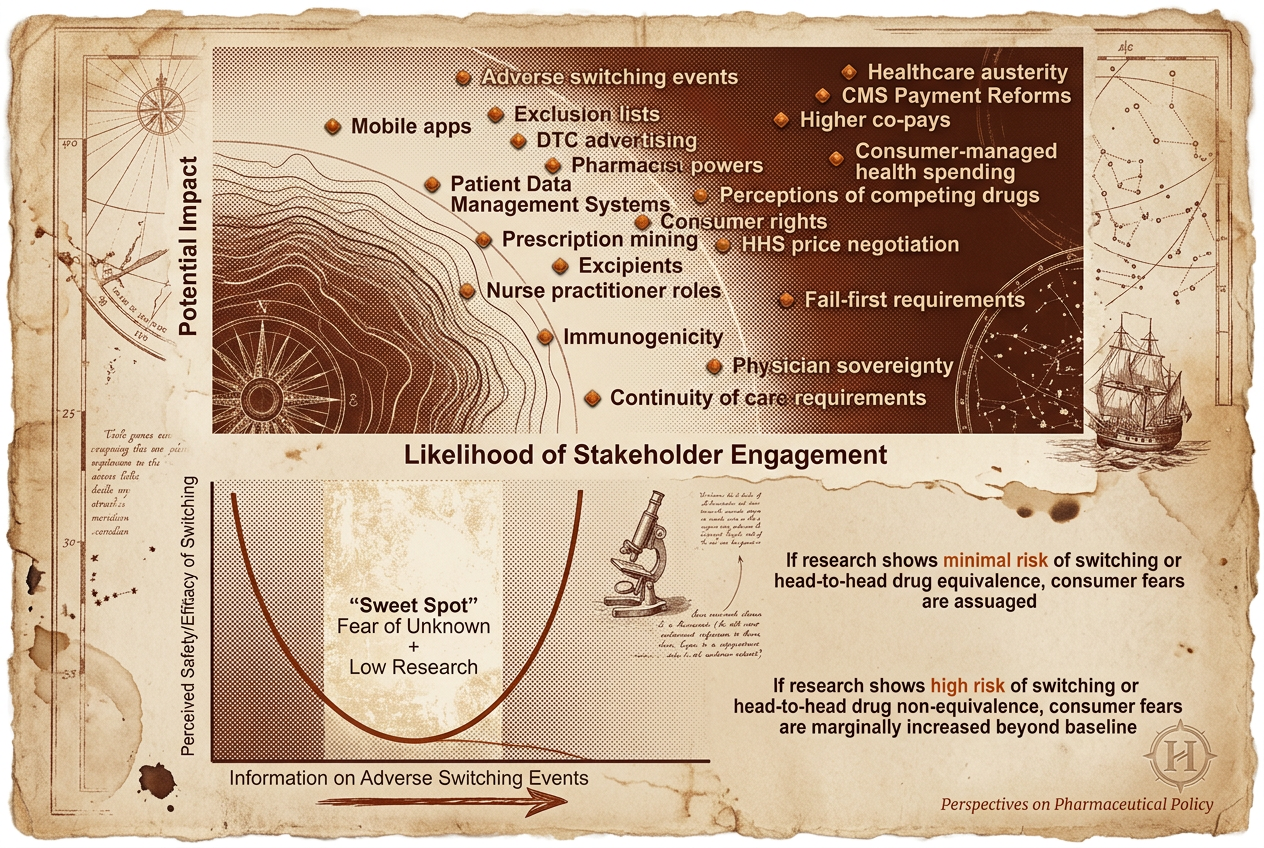 Vetting messages and messengers to build support for regulatory change
Pharmacy benefit managers created pricing signals to standardize negotiations between drug distributors and insurance payors, but their presence also created concerns about preserving the integrity of physician prescriptions. Patients don't always get the same drug their doctor prescribed when a similar drug is available at lower cost — a practice called non-medical switching.
Our client had spent significant resources tailoring its formulation to the needs of its patients, and needed a campaign to curtail non-medical switching when it had the potential to harm outcomes. We helped convince key influencers and arm them with the right messages, disseminated through the right channels.
- Case 08 / 08
We All Need a Little Guidance
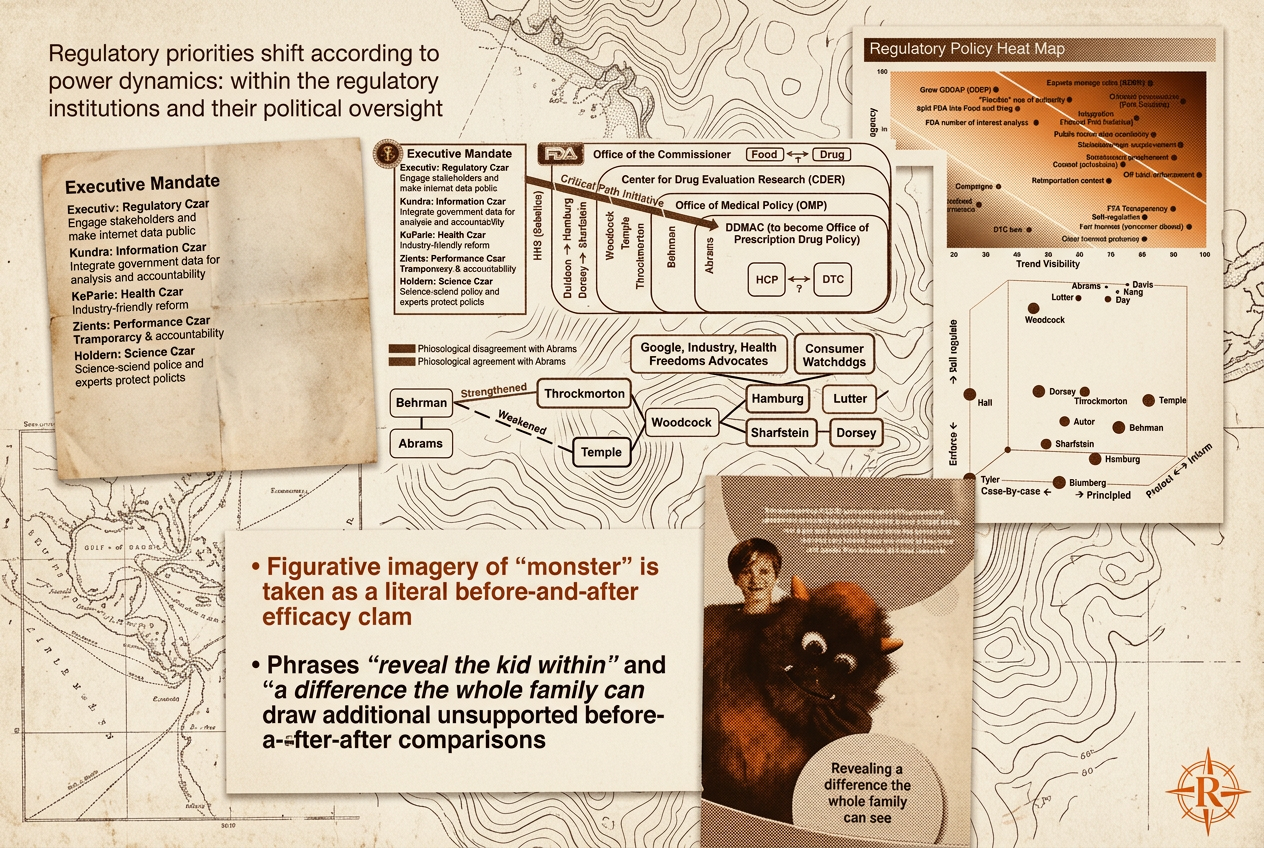 Inferring enforcement boundaries from regulatory politics and comms
Anyone who has read draft regulatory guidance is left asking, "So, what are we allowed to do?" You don't find out exactly where the boundaries are until someone crosses them. But we can contextualize official guidance by pivoting it against what we know about the people issuing it, and what is actually being enforced.
When the FDA assembled social scientists into a risk communication committee, this signaled that enforcement was going to move away from objective fair balance in risk disclosure and toward the subjective perception of risks and benefits by people who use cognitive shortcuts rather than statistics.
You can have an impact.
There ARE ways to shape your environment and shape your offerings.